Australian Parliamentary Service
Access and Inclusion Action Plan
2025–2028
Acknowledgement of Country
The Australian Parliamentary Service acknowledges the Custodians of Country throughout Australia and their continued connection to land, waters and community. We pay our respects to their Cultures, Country, and Elders, past and present.
Cover Image
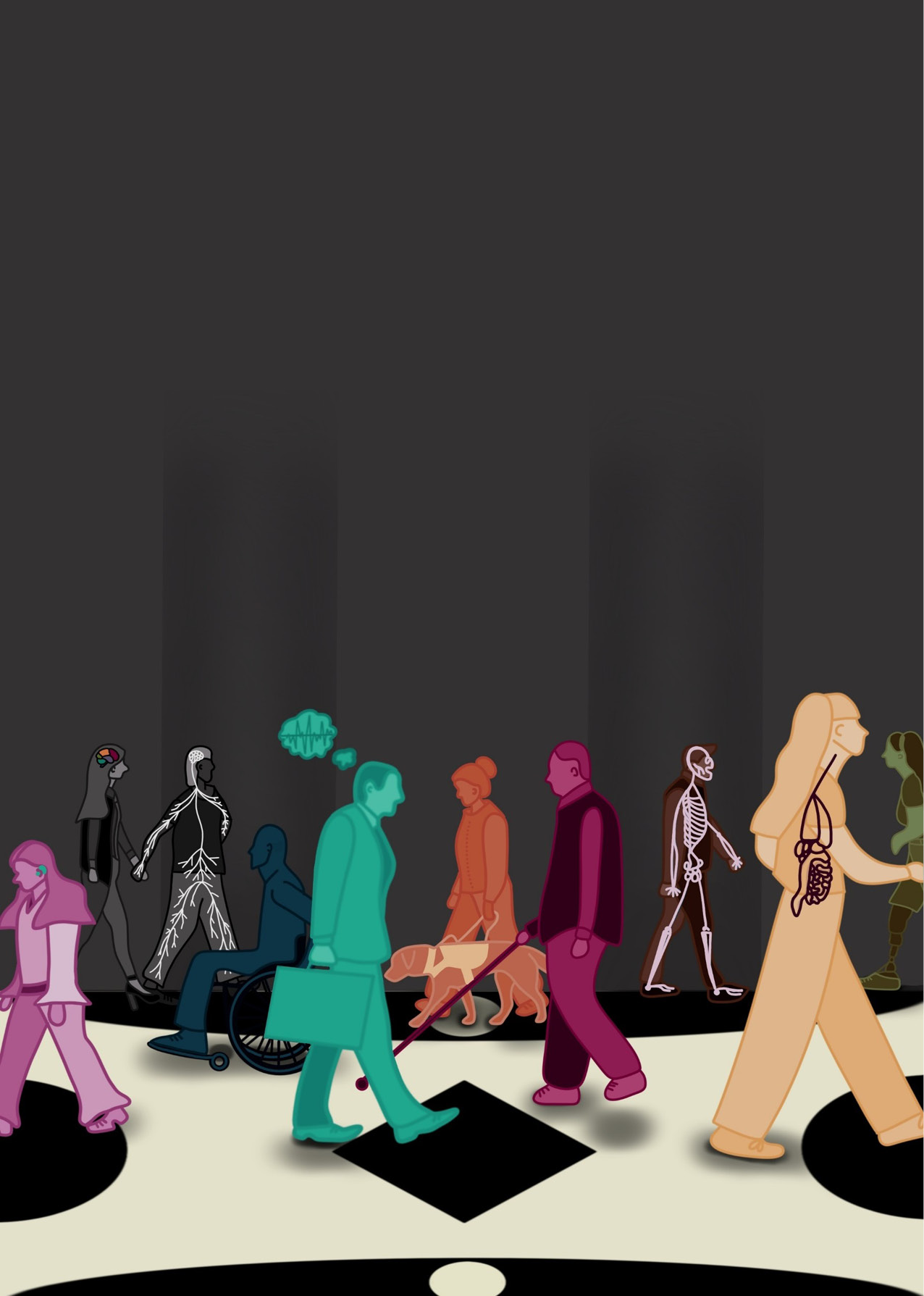
The cover page artwork conveys the diversity of people, highlighting elements of both visible and invisible disability. The artwork was designed by Paige Corunna, a Whadjuk Noongar Woman with Wajarri Yamatji and Palyku ancestral connections.
Foreword
We are proud to present the first Australian Parliamentary Service’s Access and Inclusion Action Plan (AIAP) 2025–2028. This plan affirms our commitment to building a workplace that is safe, inclusive and accessible, where every individual, including people with disability, can thrive and contribute to their full potential.
Australian Parliament House (APH) operates in a unique and dynamic environment. Each year, the building welcomes more than 800,000 visitors, from tourists and event attendees to individuals engaging in Parliamentary business. It also serves as the workplace for parliamentarians, the Executive Government, and their staff, while also providing permanent accommodation for around 2,500 people across nine Commonwealth agencies, the Federal Parliamentary Press Gallery, retail tenants, and contractors.
Developed through the lens of this unique environment, the AIAP is focused on identifying and reducing barriers faced by people with disability. These barriers can affect participation in both the democratic process and day-to-day experiences within parliamentary workplaces. Through this plan, we aim to promote a culture of dignity, equity and respect, where diversity is not only accepted but celebrated.
Our commitment to inclusion is ongoing. In November 2022, we engaged the Australian Disability Network (AusDN) to review the user experience of APH. Their report, titled Dignified Access and User Experience of Parliament House (delivered in December 2023), contained over 339 recommendations to enhance accessibility for both visitors and workers. This important work complements the AIAP and broadens our understanding of inclusive design and user experience.
The AIAP has been developed in line with the Disability Discrimination Act 1992, incorporating insights from the AusDN report and, shaped through consultation with people with lived experience of disability. Their voices have informed the actions and priorities set out in this plan.
We would like to thank the expert contributions made by the Access and Inclusion Champions Group (AICG) and the AccessABILITY Staff Network in the development of this plan.
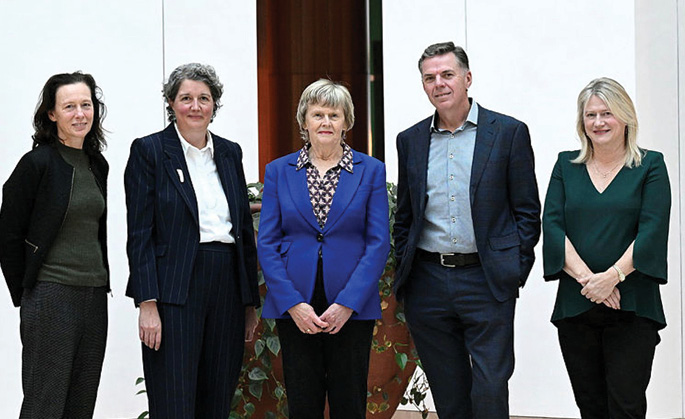
Department Heads L to R: Sam Reinhardt (Parliamentary Budget Office), Jaala Hinchcliffe (Department of Parliamentary Services), Claressa Surtees (House of Representatives), Richard Pye (Senate), Leonie McGregor (Parliamentary Workplace Support Service)
Our Vision
The AIAP outlines our shared commitment across the four Parliamentary Service departments, and the Parliamentary Workplace Support Service (PWSS) to improving opportunities and outcomes for people with disability. We are united in our goal to make Australian Parliament House an environment that is not only physically accessible, but inclusive in a way that upholds dignity, autonomy, and equal participation for all.
.jpg)
Accessibility in our workplace goes beyond meeting compliance requirements. It means embedding the voices and lived experiences of people with disability into the design, consultation, and implementation of our policies and practices. This plan is grounded in the seven principles of dignified access; vision, hearing, thinking, communication, movement, reach and stretch, and dexterity, ensuring our actions reflect the diverse ways people interact with, and experience our environment.
A core focus of the plan is making engagement with Parliament, whether in person, online, or in the workplace, more accessible. Parliament belongs to all Australians, and ensuring equal access to its spaces, services, and democratic processes is essential. We are committed to enhancing the experience of people with disability who visit Parliament House, work within it, or access our online services. This will be through improved systems, technology, and support mechanisms. Our efforts also focus on creating inclusive workplaces where people with disability can build meaningful and rewarding careers. This means removing structural and other barriers to employment, progression, and participation.
In recognition of the importance of collaboration, the parliamentary departments established the Access and Inclusion Champions Group (AICG) in February 2023. This group includes senior executives from Department of Parliamentary Services (DPS), the Department of the Senate, the Department of the House of Representatives, the Parliamentary Budget Office and the Parliamentary Workplace Support Service (PWSS). The AICG has played a key role in shaping this plan.
Sustained and meaningful change requires leadership and accountability at all levels. The Access and Inclusion Champions act as stewards for accessibility across the Parliamentary Service, promoting disability inclusion as a strategic workforce priority. Their advocacy supports the creation of workplaces that are more innovative, collaborative, and responsive to the needs of all staff. They also guide efforts to remove barriers and improve participation, while considering both the legislative requirements and operational demands.
Definition of Disability
We recognise that disability is not defined solely by a medical condition but also by the social, cultural, physical and environmental barriers that limit full participation.
For employment-related purposes, we use the definition aligned with the Disability Discrimination Act 1992 which broadly defines disability as including physical, immunological, neurological, intellectual, learning, developmental, mental health, and sensory. The Disability Discrimination Act 1992 (Cth) defines disability as:
- total or partial loss of the person’s bodily or mental functions.
- total or partial loss of a part of the body.
- the presence in the body of organisms causing illness.
- the presence in the body of organisms capable of causing illness.
- the malfunction, malformation or disfigurement of a part of the person’s body.
- a disorder or malfunction that results in the person learning differently from a person without the disorder or malfunction, and
- a disorder or illness that affects a person’s thought processes, perception of reality, emotions or judgment or that results in disturbed behaviour.
The Australian Parliamentary Service
The Parliamentary Service provides professional support, advice and facilities to each House of the Parliament, to parliamentary committees and to Parliamentarians of the House of Representatives and Department of the Senate. It consists of four parliamentary departments with distinct but overlapping roles.
While each department performs a unique role, we share a common goal in serving, supporting and upholding the institution of the Parliament, and together provide services to ensure:
- Parliament and its committees are supported effectively.
- that Parliamentarians are supported to undertake their work.
- the community can easily access and engage in the work of the Parliament and parliamentary committees.
- that national, international and regional relationships are maintained with other parliaments, parliamentary bodies and organisations.
- Australian Parliament House (APH) is sustained as a workplace and national institution,
- the parliamentary service is independent and non-partisan.
Department of the Senate
The Department of the Senate provides secretariat support for the Senate and its committees, and advice and support to enable senators and others to participate in their meetings. Its work is substantially driven by the requirements of the Senate and senators. The department also provides a parliamentary education program to Australian school students through the Parliamentary Education Office and offers a seminar program for APS officers and other stakeholders. In the 2024 APS Employee Census (APS Census) results for the Department of the Senate, 9 per cent of respondents identified as having an ongoing disability, 11 per cent considered themselves neurodivergent and a further 6 per cent as possibly neurodivergent. The Department participates in the APS Census bi-annually.
Department of the House of Representatives
The Department of the House of Representatives provides services to support the efficient conduct of the House of Representatives and its committees, and a range of services for members in Parliament House. It also undertakes activities to promote the work of the House in the community and is responsible for the conduct of the Parliament’s international and regional relations. In the 2024 APS Census, results for the Department of the House of Representatives showed 7 per cent of respondents identified as having an ongoing disability, 10 per cent considered themselves neurodivergent and a further 8 per cent as possibly neurodivergent. Like the Department of the Senate, the Department of the House of Representatives participates in the APS Census bi-annually.
Department of Parliamentary Services
The Department of Parliamentary Services (DPS) provides a wide range of services and facilities to ensure that the Parliament functions effectively. These include audio visual and Hansard services, library and research services, art services, building grounds and design intent services, visitor services, security services, and information and communication technology services.
DPS, which has stewardship of APH, strongly supports workplace diversity and is committed to increasing employment opportunities and improving workplace experiences of people with disability. In the 2025 APS Census, results for DPS showed 12 percent of respondents identified as having an ongoing disability, 9 per cent considered themselves neurodivergent, and a further 12 per cent as possibly neurodivergent.
Parliamentary Budget Office
The Parliamentary Budget Office supports the work of the Parliament by providing independent and non-partisan analysis of the financial impact of policy proposals and by publishing reports on budget issues. In the 2025 APS Census, results for the Parliamentary Budget Office showed 13 percent of respondents identified as having an ongoing disability, 13 per cent considered themselves neurodivergent, and a further 11 per cent as possibly neurodivergent.
Supporting Partners
Parliamentary Workplace Support Service
The Parliamentary Workplace Support Service (PWSS) is a team of advisors helping to build and maintain a safe, respectful, and inclusive parliamentary workplace. The PWSS supports MOP(S) Act staff, parliamentarians and people who work or have worked in Commonwealth Parliamentary Workplaces across Australia – not limited by location.
The PWSS is not a member of the Australian Parliamentary Service, and is established under the Parliamentary Workplace Support Service Act 2023. The PWSS is a member of the AICG and has participated in the entire development of the AIAP.
In the 2025 APS Census, results for the PWSS showed that 7 per cent of respondents identified as having an ongoing disability, 9 per cent considered themselves neurodivergent, and a further 9 per cent as possibly neurodivergent.
The Action Plan
The AIAP 2025–2028 outlines the actions we will take over the next three years, based on four pillars:
- Leadership, Governance and Strategic Alignment
- Inclusive Culture and Capability
- Accessible Workplaces and Digital Environments
- Inclusive Employment and Partnerships
Pillar 1: Leadership, Governance and Strategic Alignment
Focus: Embedding leadership accountability, governance structures, and strategic oversight to champion access and inclusion.
Leadership
| Number
|
Action
|
Timeline
|
Responsibility
|
1.1 |
Maintain an Access and Inclusion Champions Group across all Parliamentary Departments to monitor and implement actions items. |
Ongoing |
AICG Champions |
1.2 |
Senior leaders provide visible leadership and commitment to the action plan. |
Ongoing |
AICG Champions |
1.3 |
Senior leaders to engage with stakeholders, including the AccessABILITY Network, on disability-related matters. |
Ongoing |
AICG Champions |
1.4 |
Senior leaders to support International Day of People with Disability (3 December), as well as other days of significance as noted on the Health, Wellbeing and Inclusion Calendar. |
December annually |
AICG Champions |
Policy and Strategy
| Number
|
Action
|
Timeline
|
Responsibility
|
2.1 |
Develop/review disability related policies and strategies including:
- Disability Employment Strategy
- Reasonable Adjustments Policy, and
- Reasonable Adjustments Passport
|
June 2026, then annually |
AICG Champions |
Governance
| Number
|
Action
|
Timeline
|
Responsibility
|
3.1 |
Submit a progress report and update to the Parliamentary Heads Group. |
Quarterly 2025, 2026, 2027 |
AICG Secretariat |
3.2 |
Report AIAP achievements to the AccessABILITY network. |
Bi-annual reporting |
AICG Secretariat |
3.3 |
Review and auditing for next plan.
- An audit of all actions under the AIAP will be conducted, and
- External and internal consultations with people with a disability to inform on progress and areas for improvement.
|
December 2027 |
AICG Secretariat |
Pillar 2: Inclusive Culture and Capability
Focus: Building an informed and respectful workplace culture through training, representation, and awareness.
Capability Development
| Number
|
Action
|
Timeline
|
Responsibility
|
4.1 |
All staff to complete disability confidence training. |
Annually |
HR Directors
across all Parliamentary Departments and the PWSS |
4.2 |
Information and training provided to new staff at induction. |
Annually |
HR Directors
across all Parliamentary Departments and the PWSS |
4.3 |
Undertake internal communications campaigns to raise awareness of disability-related matters including initiatives, reasonable adjustments, PEEPs, networks and updating HR data/health declarations. |
Annually in March and August |
HR Directors and Communications |
4.4 |
Review the Parliament House Art Collection for representation of people with disability. |
December 2025 |
Art Collections, DPS |
Meetings and Events at Australian Parliament House
| Number
|
Action
|
Timeline
|
Responsibility
|
5.1 |
Develop guidelines for events to improve accessibility and enact reasonable adjustments. |
March 2026 |
Parliamentary Engagement, DPS |
5.2 |
Update event management plans to consider access needs. |
June 2026 |
Parliamentary Engagement, DPS |
5.3 |
Create an accessible facilities guide for visitors and guests and research options for a sensory map of Australian Parliament House. |
June 2026 |
Parliamentary Engagement, DPS |
5.4 |
Develop accessible tour options, including an accessibility checklist for exhibitions and events. |
March 2026 |
Parliamentary Engagement, DPS |
5.5 |
Review and update guidance materials for attendees at parliamentary committees to improve accessibility and reasonable adjustments. |
December 2025 |
Senate/House of Representative Committee offices |
5.6 |
Review and update guidance materials to submitters of parliamentary inquiries on inclusivity and accessibility. |
December 2025 |
Senate/House of Representative Committee offices |
5.7 |
Review forms and documents given to witnesses to ensure they meet accessibility requirements, and explore alternative formats if required. |
July 2026 |
Senate/House of Representative Committee offices |
Pillar 3: Accessible Workplaces and Digital Environments
Focus: Creating physically and digitally accessible workplaces and public spaces.
Accessibility across Australian Parliament House
| Number
|
Action
|
Timeline
|
Responsibility
|
6.1 |
Each department to commence a baseline assessment of physical, sensory and cognitive accessibility of the workplace. |
March 2026 |
AICG Champions |
6.2 |
Review of physical accessibility across APH in line with outcomes detailed in the Dignified Access Review. |
Ongoing |
AICG Champions |
Digital Accessibility
| Number
|
Action
|
Timeline
|
Responsibility
|
7.1 |
Align digital accessibility with the Parliament of Australia Digital Strategy 2023–2027 including:
- WCAG Compliance
- APH Website W3C best practice, and
- Departmental Intranet W3C compliance.
|
June 2026 |
Chief Information Officer, DPS |
7.2 |
Review the visitor bookings process for physical, sensory and cognitive accessibility. |
April 2026 |
Parliamentary Engagement, DPS |
7.3 |
Explore an alternative Hansard transcript for witnesses who require an adjustment due to factors such as disability, limited literacy and/or challenges with comprehension (e.g. larger font, more white space, smaller segments) |
December 2026 |
Hansard, DPS |
Pillar 4: Inclusive Employment and Partnerships
Focus: Driving inclusive recruitment, career development, and partnerships that improve access and equity.
Relationships
| Number
|
Action
|
Timeline
|
Responsibility
|
8.1 |
Maintain the Parliamentary Service AccessABILITY Employee Network. |
Ongoing |
Parliamentary Heads Group |
8.2 |
Undertake consultation and actively involve people with disability and carers on disability-specific matters. |
Ongoing |
AICG Champions |
8.3 |
Investigate partnerships with disability organisations including training providers. |
Ongoing |
AICG Champions |
8.4 |
Participate in inter-departmental disability networks. |
Ongoing |
AICG Champions |
8.5 |
Establish a process for staff, building occupants and visitors to provide feedback on access, inclusion and disability-related matters. |
April 2026 |
Parliamentary Engagement, DPS |
Employment
| Number
|
Action
|
Timeline
|
Responsibility
|
9.1 |
Include an accessibility and inclusion statement on all job advertisements encouraging people with disability to apply. |
December 2025 |
HR Directors across all Parliamentary Departments and the PWSS |
9.2 |
Each department to review recruitment practices to remove barriers. |
December 2025 |
HR Directors across all Parliamentary Departments and the PWSS |
9.3 |
Identify suitable positions and undertake affirmative measures recruitment, including RecruitAbility, as an option for job vacancies. |
July 2026 |
HR Directors across all Parliamentary Departments and the PWSS |
9.4 |
Explore the use of disability internship programs. |
March 2026 |
HR Directors across all Parliamentary Departments and the PWSS |
For further information, please contact the AICG Secretariat via inclusion@aph.gov.au.