Executive
summary
Derivatives are powerful financial instruments that play
an important role in the capital markets. If they are mispriced or
underregulated, they can amplify underlying systemic risks in the global
financial system.
In 2003 Warren Buffett described derivatives as ‘financial
weapons of mass destruction’. The 2008 Global Financial Crisis arguably proved
the truth of his words because mispriced derivatives contributed to the
systemic risks in the global financial system that eventually caused the
crisis.
The 2008 crisis prompted a comprehensive international
regulatory response, directed through the G20 forum (including
Australia).[1] Since 2009 Australian regulators have been implementing the G20 reforms to
improve transparency in the derivatives market.[2]
Notwithstanding the G20 reforms on derivatives trading, some
analysts fear that major international banks are becoming too exposed to
mispriced derivatives once again.[3] Furthermore, the strengthening of prudential regulations on banks (as outlined
by Basel III) meant that the banks might find it cheaper to shift risk using
derivative contracts.[4] This has sparked a public debate on whether there is sufficient government
regulation of derivatives trading in Australia and other countries.[5]
As an open economy Australia is vulnerable to global risks that
could trigger a ‘liquidity
crunch’ or a reduction in international trade. This has implications for
legislative changes implementing the G20 reforms, the resourcing and
effectiveness of Australian regulatory agencies supervising derivatives trading
and Australia’s engages with international partners in monitoring the progress
of G20 reforms on the derivatives market.
What is a financial derivative?
A derivative is a contract between two parties that derives
its value from the performance of an underlying asset. The underlying asset can
be almost anything of value (most commonly commodities, stocks and bonds).
There are many types of derivatives. Traditional forms of
derivatives such as options and forward contracts (illustrated in the example
below) have existed for hundreds of years. Newer and more complex derivatives
such as collateralised debt obligations or credit default swaps have grown
enormously in recent decades, and now constitute a multi-trillion dollar
worldwide market.[6]
Why do investors and firms use derivatives?
Derivatives are risk management tools. Investors and firms
use derivatives primarily for two reasons:
- to hedge against future price
movements, reducing uncertainty; or
- to speculate on future price
movements, accepting greater risk exposure in exchange for the chance of
greater profit. [7]
Using derivatives to hedge
Derivatives can make future cash flows more predictable, so
many investors and firms use them to hedge against potential risk. In this
regard, using derivatives is like buying an insurance policy that protects the
investor against price uncertainty.
Using derivatives to speculate
Investors who are prepared to accept additional risk often
use derivatives as a speculative tool. The purpose of speculation is to make a
profit from betting that the prices of assets will move in a favourable
direction. Complex derivatives allow investors to speculate on virtually
anything.
What role do derivatives play in the financial markets?
Derivatives serve an important ‘price discovery’ role in the
economy as they can be used for establishing the prices of goods and services.
When used as a hedge, derivatives provide investors with predictable cash flows
and limit their risk exposure. Trading derivatives as a speculative tool can
also provide liquidity and price signals in the financial markets.
Derivatives trading has opened up a wide array of financial
markets for investors. For example, an Australian investor can speculate on the
price of American soybeans or the value of the Canadian dollar by using
derivatives.
On the other hand, mispriced and unregulated derivatives can
pose a risk to the global financial system, as
happened in the 2008 Global Financial Crisis.
How did mispriced derivatives contribute to the Global
Financial Crisis?
The rise of collateralised debt obligations
Professor
Michael Greenberger of the University of Maryland, among many others,
believes that the extensive misuse of derivatives
amplified the 2008 Global Financial Crisis – in particular, through the use of
a type of derivative known as collateralised debt obligations (CDOs).[9]
CDOs
grew in popularity in the United States in the early 2000s, with CDO
sales increasing from US$30 billion in 2003 to US$225 billion in 2006.[10] According to the Reserve Bank of Australia, global CDO issuance increased
sixfold from 2002 to 2006 (see Figure 1 below).
Figure 1: Issuance of CDOs increased significantly in the early 2000s

Source:
Susan Black and Alan Rai, ‘Recent Developments in Collateralised Debt Obligations
in Australia’, Reserve Bank of
Australia Bulletin (November 2007): 5.
Fuelled by a housing market boom
and an increase in mortgage uptake in the United States in the early 2000s,
banks made handsome profits by packaging various types of loans into CDOs and
selling them to investors.[11] This was usually done via a subsidiary company called a special purpose vehicle to shield the parental company from financial risk.[12]
There is a broad academic
consensus that CDOs were frequently overvalued prior to 2008.[13] Additionally, the extent of banks’ exposure was opaque due to the complexity of
these derivatives, so the extent of systemic risk went unnoticed.[14] Banks held CDOs on their ‘books’ before selling them to other investors (for
example, pension funds). Banks also invested in each other’s CDOs. As such, the
banking sector as a whole was financially exposed to a collapse in CDO value.
These problems were compounded by
credit rating agencies’ underestimation of CDOs’ real risk.
Misconduct of credit rating agencies
Many academics, such as Professor Lawrence White of the New
York University, argued that the misconduct of credit rating agencies contributed to the overvaluation of CDOs.[15]
Credit rating agencies are typically private companies paid
by banks or investors to assess the risk levels of
financial products. This includes determining the value and risk levels
of derivatives – for example, in the 2000s, whether CDOs were backed by
high-grade or subprime/riskier loans. However, for fear of losing their
customers (including banks that wanted to sell CDOs), credit rating agencies
often gave good credit ratings to CDOs backed by subprime/riskier loans.[16]
For example, some of the loans that were packaged into CDOs
were known as NINJA (no income, no job, no assets) loans that carried a high
risk of default.
These inflated credit ratings
meant that many CDOs were overvalued. Buyers of CDOs were unaware of the
default risk that these derivatives carried and assumed they were a good
investment. Put simply, CDOs were no longer an effective risk management tool
(which is the main purpose of derivative contracts) because investors were
unaware of the real risk CDOs carried.
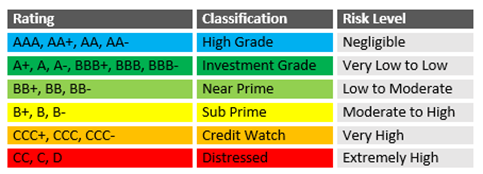
The table below shows examples of credit ratings and their
corresponding risk levels.
Table 1: examples of credit ratings and their supposed risk level
Source:
‘Equifax Credit Ratings’, Equifax Australasia
Credit Ratings Pty Ltd.
Regulation of derivatives trading prior to 2008
Despite sales of CDOs increasing exponentially in the early
2000s, CDO trading remained largely unregulated in the United States.
CDOs had traditionally been privately negotiated and traded
between 2 parties without going through a centralised
clearing exchange. Such privately negotiated derivatives are known as ‘over-the-counter’
(OTC) derivatives.[17] Many officials in the United States Government at the time believed that
because OTC derivatives were mostly negotiated between sophisticated investors
who knew what they were getting into, derivatives trading needed less
regulation compared to other financial products.[18]
In 1998, the former Federal Reserve Chairperson Alan
Greenspan told Congress that ‘regulation of derivatives transactions that are
privately negotiated by professionals is unnecessary’.[19] In 2000, Congress passed the Commodity
Futures Modernization Act that excluded derivatives trading from regulatory
oversight.[20]
Had CDO trading been conducted through centralised clearing
exchanges, United States regulators may have had an easier time overseeing the
derivatives market and stopping questionable trading practices.[21] Instead, the private, bilateral nature of OTC derivatives meant there was a
lack of transparency concerning the risk profile of market participants in the
derivatives markets.[22]
Building a ‘house of cards’
In 2005 Professor Raghuram Rajan, the former Chief Economist
at the International Monetary Fund, warned that perverse incentives (coupled
with the wrong monetary policy) could lead banks and investment firms to take
excessive risks.[23]
There were strong incentives for investment managers at
banks and investment firms to generate profits because their pay or bonuses
were largely performance based. As such, Professor Rajan was concerned that
managers were incentivised to use innovative financial instruments, like
derivatives, to take excessive risks with company money in the hope of
generating high returns, which could then lead to a ‘catastrophic meltdown’ of
the financial system.[24]
Professor Nouriel Roubini of New York University described
the perverse incentive culture of investment managers:
People were essentially being rewarded for taking massive
risks. In good times, they generate short-term revenues and profits and
therefore bonuses. But that’s going to lead to the firm to be bankrupt over
time. That’s a totally distorted system of compensation.[25]
In the early 2000s, major banks traded an increasing number
of mortgage-backed securities (MBSs) and derivative contracts that repackaged
MBSs. This increased their short-term profits but also significantly increased
their risk exposure, partially because they had incorrectly assessed the risk
levels of the derivatives.[26]
Put simply, derivatives were one of the financial tools
that allowed investment managers to take on excessive financial risks (for the
purpose of generating short-term revenues) without tipping off the regulatory
authorities.
In addition to CDOs, banks and investors used other complex
derivatives such as synthetic CDOs and credit default swaps (CDSs) to make ‘side
bets’ speculating on whether the value of CDOs would rise or fall.[27]
Banks and investors used CDSs to
hedge against the potential risk of loan default. While this decreased the risk
exposure of investors, it significantly increased the risk exposure of major
insurance companies.
American International Group (AIG),
one of the world’s largest insurance companies, was a prolific underwriter and
seller of CDSs. Many investors purchased AIG’s CDSs because they had lent out
money and wanted to be compensated if the loans went bad. Many speculators, who
were not themselves parties to the loans, also purchased CDSs to speculate that
the loans would go bad.
As OTC derivative markets were largely unregulated, in
theory AIG could underwrite and sell unlimited CDSs even if it did not have
enough collateral to pay out the CDSs when loans went bad.
In 2008, the New York Times featured an
article that reported AIG’s Financial Products Division had underwritten
and sold CDSs worth $500 billion (US dollars), and that the company was receiving
as much as $250 million a year in income from CDS ‘insurance premiums’.[30] Many of these CDSs were to provide insurance to financial institutions holding
CDOs, in case loan borrowers defaulted.
In other words, the investment managers at AIG took
excessive risks and miscalculated the chance of a mass loan default, and
therefore grossly mispriced the CDSs they had underwritten.[31]
It is unclear whether the senior executives of the AIG knew
the company had sold CDSs in excess of its ability to pay out in the event of a
mass loan default. Nevertheless, the investment managers’ focus on short-term
gains and a lack of regulatory oversight meant that very few people at AIG had
the incentives to speak out against excessive risk-taking.
Through holding a large volume of mispriced derivatives
on their balance sheets, major banks and insurance companies became extremely
exposed to the potential risk of a mass default on subprime mortgages and other
related loans.
Professor
Frank Partnoy of the University of California explained how derivatives
amplified risk exposure, spreading it throughout financial markets:
If you were a homeowner with a risky subprime mortgage loan,
CDO arrangers might put together a hundred side bets on whether you would
default. Through credit default swaps, a hundred investors around the world
could be exposed to the risk that you might not make your next monthly
payments.[32]
The collapse of a ‘house of cards’
It is worth repeating that a derivative contract derives its value from an underlying asset, with the asset underlying a CDO in the
cases above being an income stream from subprime mortgage repayments. If this
asset becomes worthless – for example because the borrower defaults on the loan
– then the derivative CDO also becomes worthless.
When the American housing market slowed down in 2007–08
after a two-decade housing boom, many mortgage holders started to default on
their loans, and the number of home foreclosures increased substantially.[33] It became increasingly evident that the value of CDOs reliant on subprime
mortgage repayments had been vastly overstated.
While some banks did not know the exact extent of the losses
they faced from holding these overvalued CDOs, other banks actually attempted
to sell overvalued CDOs to unsuspecting investors to mitigate their losses.[34] The resulting fear and uncertainty made banks and investors reluctant to lend
money, contributing to a global ‘liquidity
crunch’ that exacerbated the 2008 Global Financial Crisis.[35]
To ‘bail out’ AIG and some major banks, the United States
Government implemented the Troubled Asset Relief Program to purchase up to $700
billion in distressed assets from these companies to keep them solvent.[36]
In 2009, President Barack Obama said:
Under these circumstances, it's hard to understand how
derivative traders at AIG warranted any bonuses, much less $165 million in extra
pay. How do they justify this outrage to the taxpayers who are keeping the
company afloat?[37]
Regulation of
derivatives trading in Australia
Why is regulation of derivatives trading so challenging?
Regulation of derivatives trading is challenging because
governments may not always have adequate information on the derivatives market.
Economist Vania Stavrakeva argues:
Derivatives are much more complicated contracts than regular
loans, bond and equity purchases and have very different accounting standards.
In order to estimate the exposure of banks to systemic crises caused by
derivative positions, regulators will need both bank specific transaction level
data and fairly complex value at risk models …
Of course one should not forget that derivatives can also
improve welfare by allowing firms and financial institutions to hedge risk and
by improving risk sharing. Therefore, one needs to be careful not to
overregulate.[38]
Implementation of G20 reforms
The 2008 Global Financial Crisis prompted a comprehensive international
regulatory response, directed through the G20 forum (including Australia).[39] G20 leaders agreed in September 2009:
All standardised OTC derivative contracts should be traded on
exchanges or electronic trading platforms, where appropriate, and cleared
through central counterparties by the end of 2012 at the latest. OTC derivative
contracts should be reported to trade repositories. Non-centrally cleared
contracts should be subject to higher capital requirements.[40]
As noted, the lack of data on derivatives trading has made
it more difficult for regulatory agencies to adequately supervise the
derivatives market. Before the 2008 global financial crisis, regulators in
Australia generally only had access to highly aggregated data to understand the
OTC derivatives market, and the 2008 crisis highlighted that these aggregated
data are ‘insufficient to shed light on the vulnerabilities that can exist when
there is a web of derivative transactions between a large variety of firms’.[41]
Consequently, the Australian Government has introduced a
suite of legislative
changes designed to improve transparency and reduce systemic risk
associated with derivatives trading. The legislative changes also align with
Australia’s commitment to implement the Basel III agreement that prescribes banks’ capital and liquidity requirements for
derivatives transactions.
For examples, the Corporations
(Derivatives) Determination 2013 empowers the Australian Securities and
Investments Commission (ASIC) to make rules imposing reporting requirements on
a range of derivatives.[42] The ASIC
Derivative Transaction Rules (Reporting) 2013 set out the rules for reporting
derivative transactions to trade repositories. The ASIC
Derivative Transaction Rules (Clearing) 2015 impose a mandatory central
clearing regime for OTC interest rate derivatives denominated in major currencies.
These reforms have greatly increased the information
that regulators have about the Australian derivatives market.[43]
On the other hand, some stakeholders warn the risks of
overregulation, especially considering that the COVID-19 pandemic placed
significant operational burden for market participants. For example, the
brokerage firm Pepperstone has said:
… we are concerned that some of the requirements in CP
322 are overly stringent, and do not allow for investors who understand and
accept the risks associated with trading our products to trade the way they
require. We are concerned that this restriction on investors’ freedom of choice
will result in them seeking alternatives outside of Australia, even if it means
trading outside of a regulated jurisdiction. [44]
Multilateral cooperation
Although Australian regulators have been implementing G20
reforms to reduce systemic risks in the financial sector, as an open economy
Australia remains exposed to risks in the world economy. As such, Australia has
an interest in promoting multilateral efforts to strengthen the international
institutions and mechanisms needed to manage these risks.
Australia is a member of the Financial Stability Board (FSB), an international body that monitors the
stability of the global financial system and publishes an annual
progress report on the implementation of OTC derivatives reforms. Since
2009 Australian regulators have worked with other members of the FSB to resolve
cross-border issues that have arisen in the implementation of OTC derivatives
reforms.[45]
Derivatives trading in the 2020s
Bespoke CDOs
Today, derivatives trading is widespread and accessible. An
increasing number of equity and even cryptocurrency exchanges are offering a
wider range of derivatives.[46] According to a report
by the World Federation of Exchanges, more than 32 billion derivative
contracts were traded in 2019.[47]
Trading volumes in CDOs decreased significantly after 2008.[48] However, more recently, banks have once again been increasing their CDO sales.
Due to CDOs’ negative connotations, banks have renamed these derivatives ‘bespoke tranche
opportunities’ or ‘bespoke CDOs’.[49] These new bespoke CDOs are predominantly purchased by hedge funds and other
institutional investors seeking higher returns.
In April 2019, Reuters reported that:
Trading volumes in synthetic
collateralised debt obligations linked to credit indexes are up 40% this year,
according to JP Morgan, after topping US$200bn in 2018 on the back of three
years of double-digit growth. Meanwhile, analysts predict more than US$100bn in
sales of bespoke synthetic CDOs in 2019 following an estimated US$80bn of
issuance last year.[50]
Banks have argued that the new bespoke CDOs are now backed
by safer loans rather than subprime mortgages.
Total return swaps
In March 2021, Bill Hwang, the founder of Archegos Capital
Management, used a type of OTC derivative known as a total return swap (TRS) to
indirectly invest in the US stock market. The TRS contracts significantly
increased Archegos Capital’s risk exposure, because TRSs are designed to allow
investors to trade on margin by using borrowed money (illustrated in the
example below).[51] Archegos Capital lost an estimated US$20 billion in 2 days and caused its
lenders to lose tens of billions.[52]
Because Archegos Capital was a
relatively low-profile family office, it was not subject to the same regulatory
scrutiny as major hedge funds. This allowed Archegos Capital to enter into TRS
contracts with 6 major investment banks simultaneously without disclosing to
any single bank or the regulatory authority that it had multiple TRS contracts
with other banks.[54] One commentator described Archegos Capital’s decisions as:
Imagine you go to four mates separately, borrow £1000 from
each without telling the other, and go to a casino and put it [sic] all that
money on red.[55]
In other words, the TRS allowed Archegos Capital to trade on
margin and take a highly leveraged position on selected stocks. When the stock
price fell and Archegos Capital could no longer afford to put up the collateral
to maintain its leveraged position, it caused a stock fire sale that further
depressed the stock price. This wiped billions of dollars off the stock market
and resulted in ‘one of the single greatest losses of personal wealth in
history’.[56]
The Financial Times featured an article that
commented on the potential destructive power of derivatives:
The Archegos Capital debacle has exposed the hidden risks
of the lucrative but opaque equity derivatives business through which banks
empower hedge funds to make outsize [sic] bets on stocks and related assets.
The soured wagers made by Bill Hwang’s family office have
triggered significant losses at Credit Suisse and Nomura, underscoring how
these tools can cause a chain reaction that cascades across financial markets.[57] [emphasis added]
The collapse of Archegos Capital has prompted financial
regulators around the world to investigate their risk control measures.[58] For example, the Financial Times reported that Hong Kong’s central bank
and financial regulator are planning to use centralised trade databases to
identify excessive risk-taking by banks and investment funds trading
derivatives on Hong Kong markets.[59]
Conclusion
Derivatives are powerful financial tools that can help
investors to manage risk and limit investment exposure. However, derivatives
can also lead to excessive speculative trading and significantly increase
investors’ risk exposure.
On a large enough scale, mispriced derivatives can endanger
the entire financial system. Like any other powerful tool, derivatives need to
be properly monitored and regulated. Consequently, it is important that
Australian regulatory agencies are effective in carrying out their supervision
of derivatives trading, complemented by continued promotion of multilateral cooperation
to implement derivatives market reforms.
Glossary
| Acronyms |
Definition |
| AIG |
American International Group |
| ASIC |
Australian Securities and Investments Commission |
| CDO |
Collateralised debt obligation |
| CDS |
Credit default swap |
| CLO |
Collateralised loan obligation |
| MBS |
Mortgage-backed security |
| OTC |
Over the counter |
| TRS |
Total return swap |